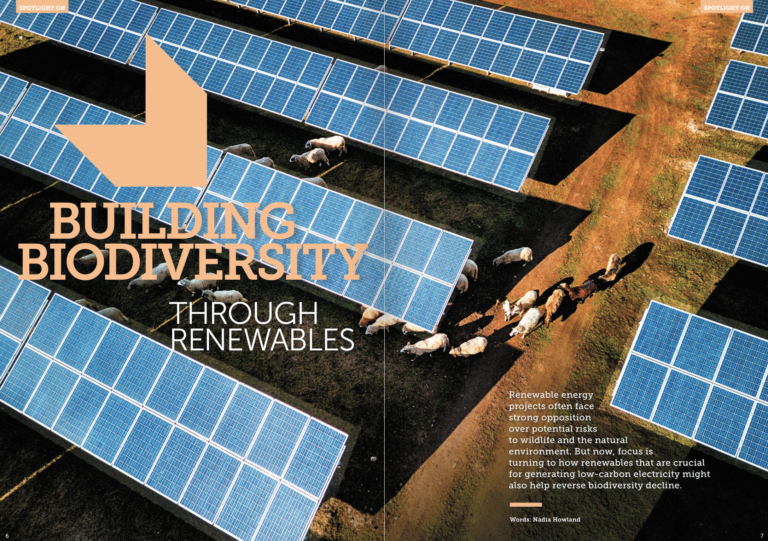
Our Guide presents innovative strategies and tools to restore nature and integrate regenerative farming techniques while producing solar energy.
Project background
The New England region of New South Wales boasts a thriving agricultural sector, but traditional colonial land-use practices have contributed to low biodiversity in the area. At the same time, the region has been designated as a Renewable Energy Zone (REZ), attracting large-scale renewable energy projects. However, these developments often raise concerns among rural landholders, as limited community involvement in the planning process can lead to mistrust.
Renewable energy projects present both challenges and opportunities for biodiversity. While changes in land use can disrupt ecosystems, they also create unique opportunities to restore and enhance biodiversity on agricultural land.
Recognising the urgent need for solar developments that support biodiversity while fostering genuine community participation, Community Power Agency’s Regional Coordinator for New England, Heidi McElnea, collaborated with local ecologist David Carr of Stringybark Ecological. Together, they secured a grant from the Foundation for Rural and Regional Renewal to create the Building Better Biodiversity on Solar Farms Guide.
The development of the Guide involved extensive collaboration with ecologists, wildlife experts, researchers, farmers, Cultural Knowledge Holders, Landcare groups and renewable energy developers, ensuring it reflected both scientific expertise and local insights.
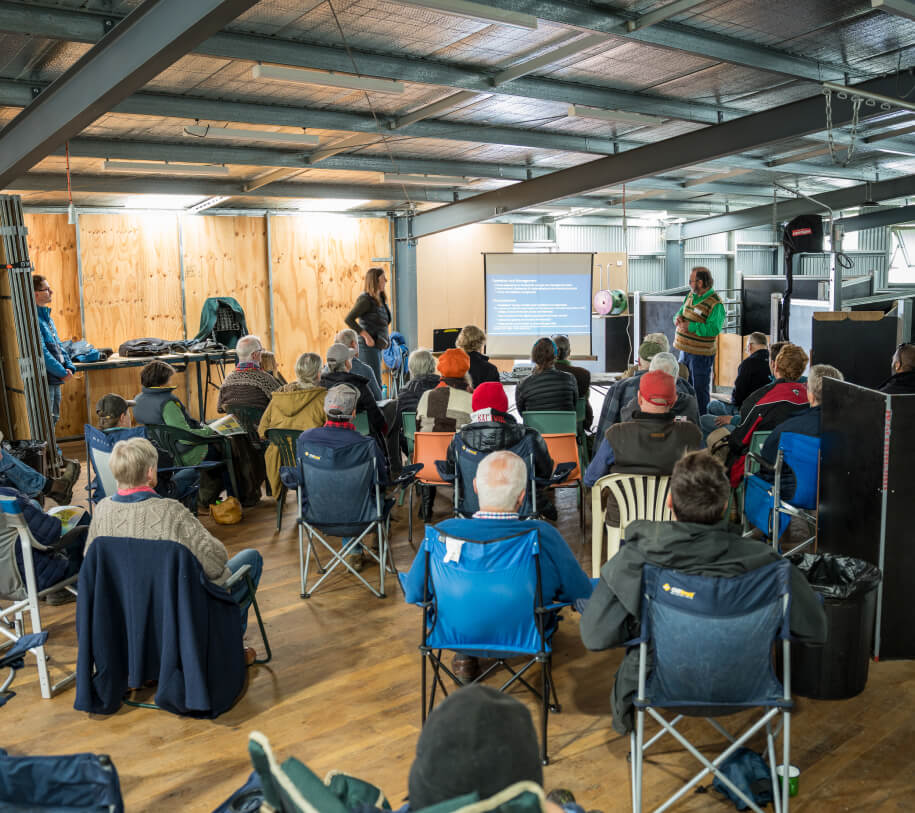
In partnership with the Glen Innes Natural Resources Advisory Committee and Southern New England Landcare, the Guide was launched with two community events: a panel discussion in Glen Innes and a biodiversity and solar workshop hosted at a local farm in Uralla. These events provided a platform for open dialogue and practical demonstrations, connecting the community with biodiversity solutions.
Project outcomes and impact
Key findings
Though focused on the unique New England Tableland bioregion, the principles outlined in the Guide can be applied across diverse Australian landscapes. The Guide demonstrates that well-designed solar farms can enhance biodiversity without reducing energy generation capacity. Solar farms can create new habitats and structural complexity, offering shelter for native species.
The Guide also illustrates co-benefits for industry. By exceeding current legislated requirements, developments can be future-proofed and have approval processes streamlined. By achieving biodiversity increases and leveraging ecosystem services, industry players can also build constructive relationships with host communities and Traditional Owners, while reducing land use conflict.
At a time when Australia is tackling the intersecting crises of climate change and biodiversity loss, this Guide provides a timely and necessary resource.
Impact
The Building Better Biodiversity on Solar Farms Guide serves as a blueprint for developing further region-specific strategies. The collaborative process behind the Guide has not only produced a valuable resource but has also strengthened relationships within the local community, fostering trust and cooperation among landholders, ecologists, and renewable developers.
The Guide has achieved significant reach through media and speaking engagements.
Media highlights include:
“Conservoltaics:” Developers urged to think of solar farms as artificial reefs, Renew Economy
New guide shows how solar farms can improve biodiversity, New England Times